

This year, the winners will be those enterprises who will strive for insights. Insights and intelligence will become central to their strategy.
Enterprises that understand this will stop asking:
“What can AI do?” And start asking: “What should we see earlier, understand deeper, and act faster on?”
Reasons to read
In 2025, we witnessed enterprises adopting AI, automations, and data cleansing at a rapid speed; this year will belong to those who drive the next step of innovation—getting real insights.
This means—
AI will commoditize insights
Your advantage = interpretation speed
Intelligent insights is where trust in AI will be earned. Strategy will become continuous, not episodic. When everyone has tools, advantage shifts to interpretation.
Strategy will become continuous, not episodic. When everyone has tools, advantage shifts to interpretation.
In this second The Scarlet Letter I reflect on what comes next.
In every boardroom, I sense frustration with the volume of data at hand. The underlying question in the HOT’s (Higher Order Thinker’s) mind is —
“So what does this mean for my business this quarter?”
Insight = signal + context + actionability
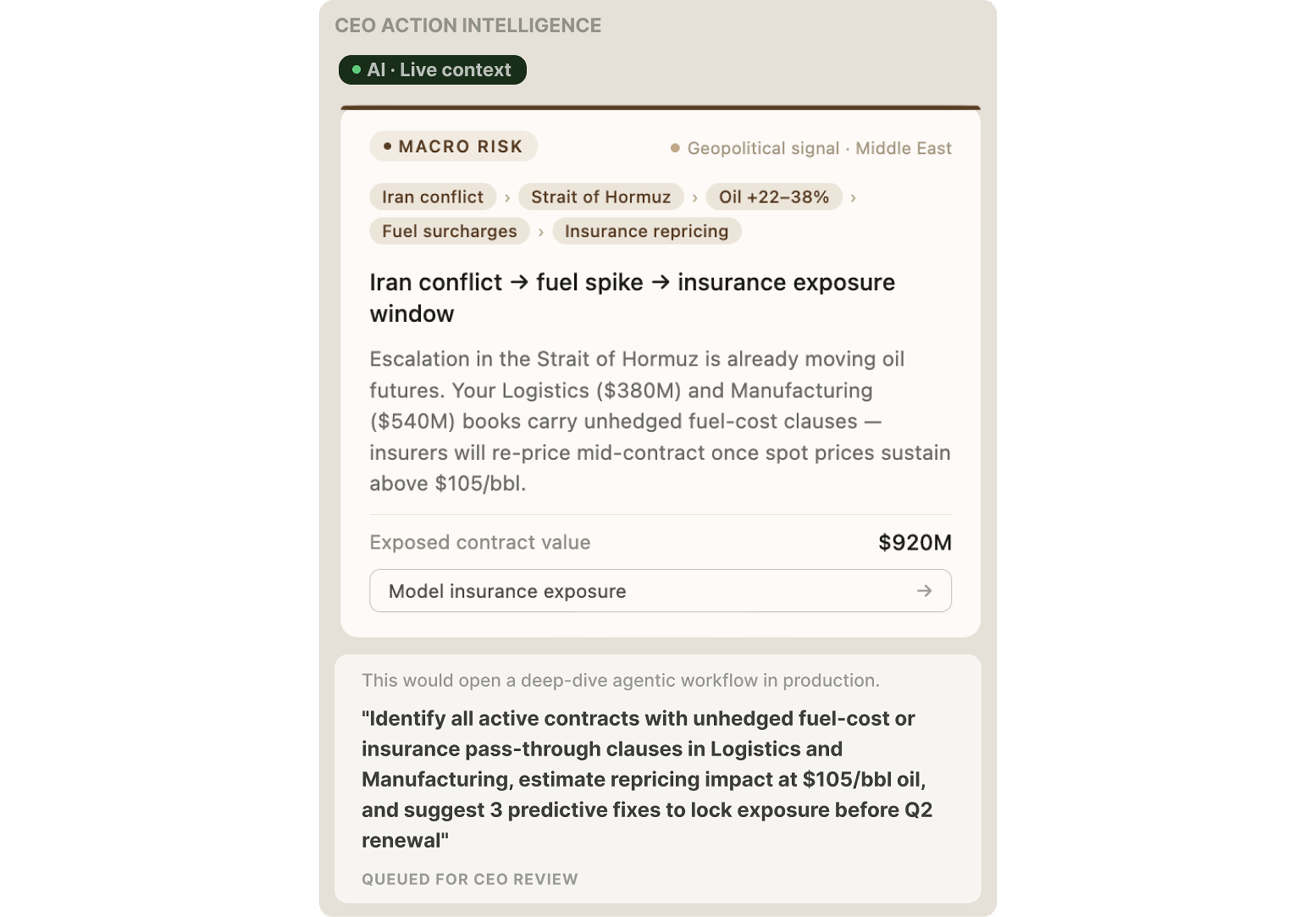
True insights don’t live in a single dashboard, or in a chart, or a summary, or a few metric shoutouts. They sit between systems: Finance + Operations + HR + Productivity + Risk + Growth + Customer behavior + Politics + Market signals.
2026 winners will be the enterprises that design insight flows—translating and interpreting with total situational awareness, not just data flows.
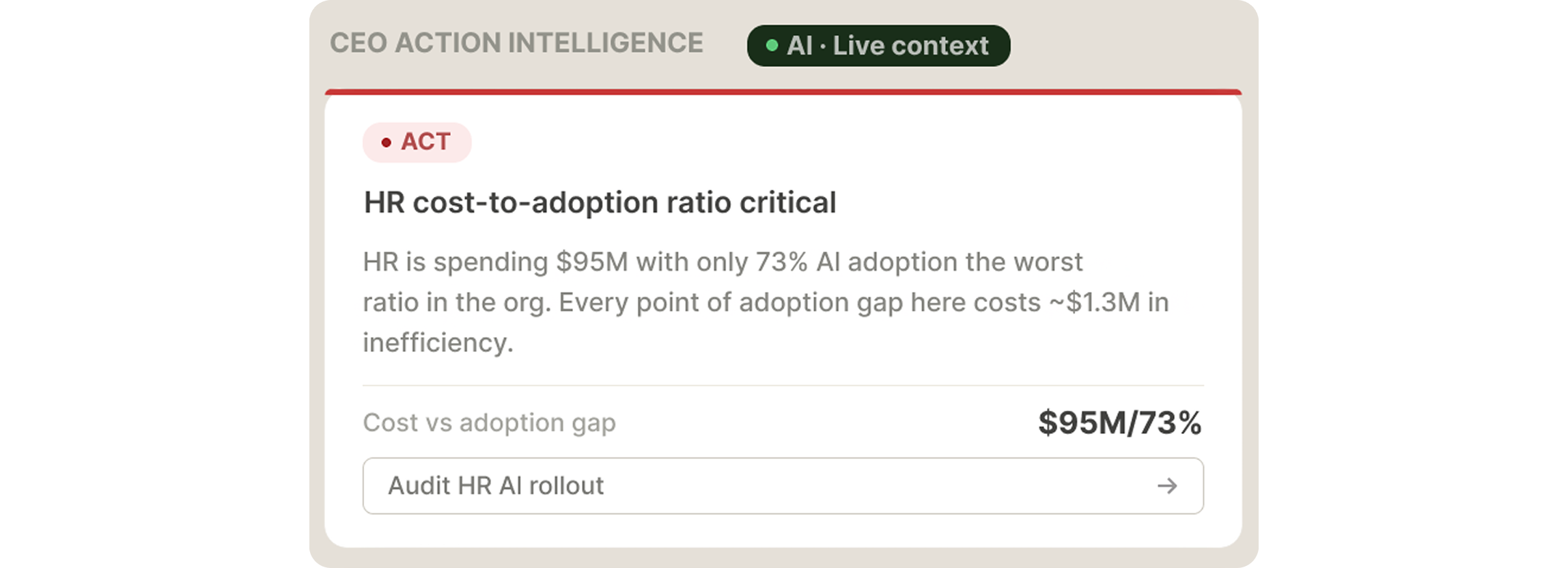
Insight is kinetic
Insight flows will collapse silos. They will connect cause and consequence. They will surface trade-offs before decisions are made. When systems begin speaking to each other intelligently, leaders gain clarity across dimensions — not in fragments.
Insight flows will collapse silos. They will connect cause and consequence. They will surface trade-offs before decisions are made.
From reporting the past to navigating the future
To take things to the next level, leaders don’t just want outputs — they want to understand what decisions to take.
They should now look into—
Consolidating fragmented data flows into decision layers
Investing in interpretation frameworks, not just dashboards
Redesign reporting → decision systems
There’s a clear shift toward insights that explain themselves in business language — with confidence levels, trade-offs, and forward-looking impact.
This will drive use cases like predictive maintenance, resilient supply chains, personalized healthcare, and smarter financial decisions.
Design for insights
But from a design lens, this isn’t simple. It requires connecting data, systems, and governance — while aligning business and tech, and presenting insights that can be actually actioned.
Because without clarity, intelligence becomes noise. Teams execute the wrong priorities faster. Leaders react instead of anticipate.
AI ends up amplifying blind spots instead of reducing them.
The direction is irreversible — the challenge is designing intelligence people can trust and act on.
Without clarity, intelligence becomes noise. The direction is irreversible — the challenge is designing intelligence people can trust and act on.
2026 belongs to the enterprises that see this earlier
The question for the coming year is not: “What new AI tool should we deploy?” It is: “What must we understand sooner than our competitors?”
The enterprises that answer that question well will not merely optimize performance. They will shape markets. 2026 will be the year enterprises learn how to see.
And those who realise this earlier will decide faster, move smarter, and build advantages that compounds.
I am Lisa Rath
I lead the product design team at ICD and consult with AI-enabled enterprises to design products across functions and departments. This piece reflects what I am observing, reading, and experiencing at work — and the direction I believe enterprise strategy is moving next.