

There is a new confidence spreading across enterprises. It feels earned. AI systems are faster, sharper, more articulate than anything we have used before. They respond with clarity. They summarize complexity. They recommend action.
And so we trust them.
Reasons to read
Enterprises are moving from using AI as an answer engine to depending on it for real decisions. The real challenge is not whether reasoning is visible, but whether it can be questioned, corrected, and shaped.
This means—
Transparency is not enough
Your advantage = intervention speed
There is a new illusion quietly taking hold in enterprises. AI feels intelligent because it speaks in conclusions — Clean. Confident. Immediate.
In this third The Scarlet Letter I reflect on the role of Chain-of-Thought (CoT) in AI tools and what enterprises should expect of them.
The Illusion Of Intelligence
While you action the answer generated, something important is being missed in this transition. When you engage with the answer, you risk ignoring the fact that it is not a finished outcome but a constructed line of reasoning. There is a sequence of decisions, assumptions, and interpretations that shape what finally appears as the answer.
You review these answers, approve recommendations, choose a path, and scale these decisions across systems. But you are not actively participating in how those decisions are being made.
That gap matters more than it seems. Conclusive answers are the easiest part of intelligence. The real work lies beneath, in how the system gets there.
Watching reasoning unfold is not the same as shaping it. When you ignore the sequence of thought and actions, you are not simplifying decision-making. You are outsourcing it.
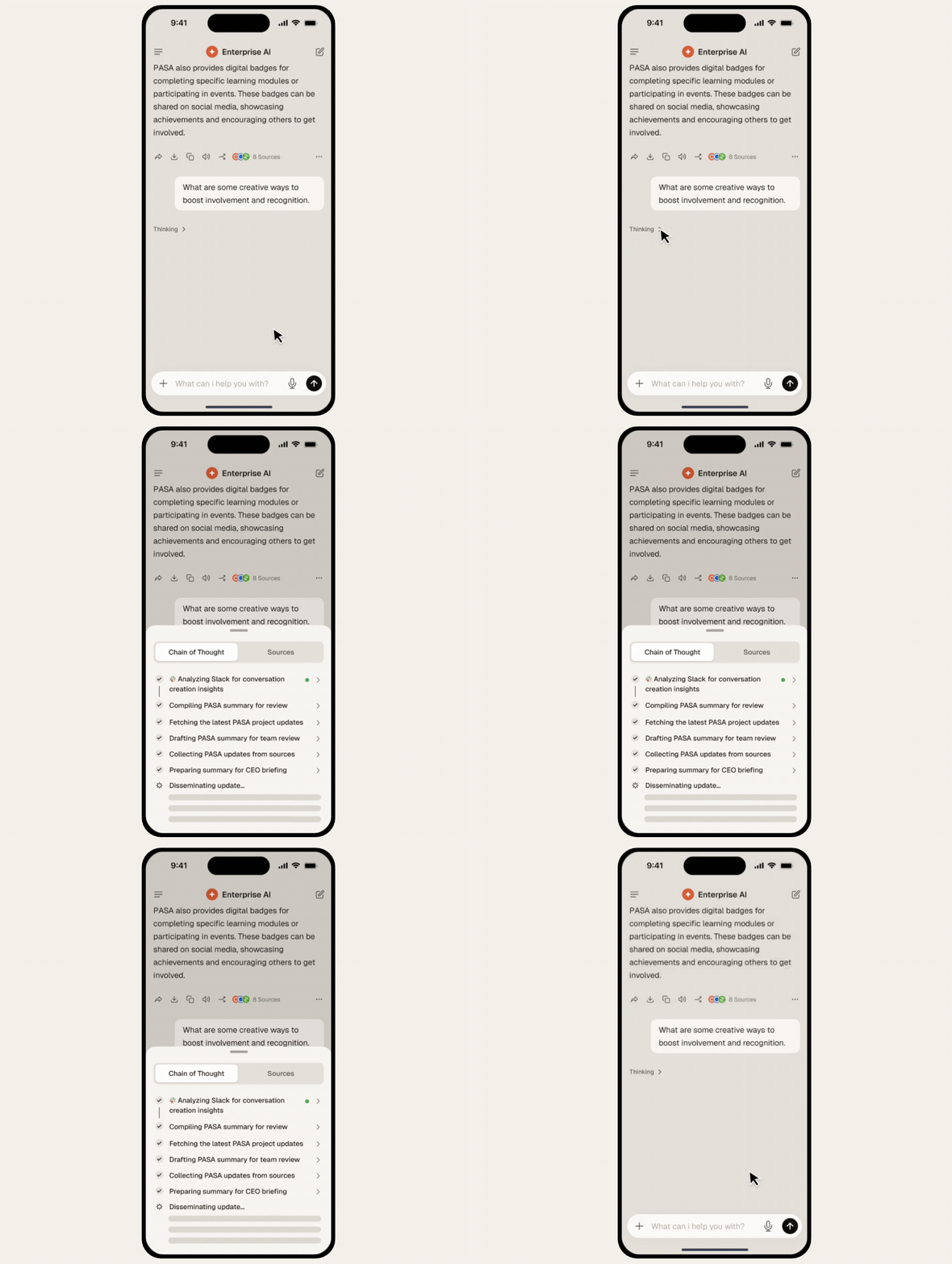
What You Are Actually Interacting With
Chain-of-Thought is often introduced as a way to make this process visible. But visibility without control defines distance. Watching reasoning unfold is not the same as shaping it.
In practice, two identical inputs can produce different decisions. That is not a bug. It is a risk. They are reconstructed outcomes built through multiple small judgments. What to prioritize, what to ignore, which source to trust, how to interpret ambiguity. These are not fixed rules. They are choices made in sequence.
When you ignore that sequence, you are outsourcing decision-making not simplifying it.
At a small scale, this seems harmless. At an enterprise scale, it becomes consequential. When AI begins to influence financial decisions, operational flows, and strategic direction, the reasoning behind those outputs is no longer a technical detail. It becomes a governance layer.
Here is where a well ‘designed’ CoT plays a defining role.
The moment AI begins to influence financial choices, operational flows, or strategic direction, the reasoning becomes a governance issue. Here is where a well ‘designed’ CoT plays a defining role.
From Visibility To Intervention
Today, most implementations treat Chain-of-Thought as a layer of transparency. It is performative. It builds a sense of trust by revealing steps, but those steps remain fixed. The user can observe, but not intervene.
That is not how intelligence works in the real world.
In any serious decision-making environment, reasoning is negotiated. It is challenged, redirected, refined. Assumptions are questioned before they are allowed to shape outcomes. Paths are corrected mid-way, not audited at the end.
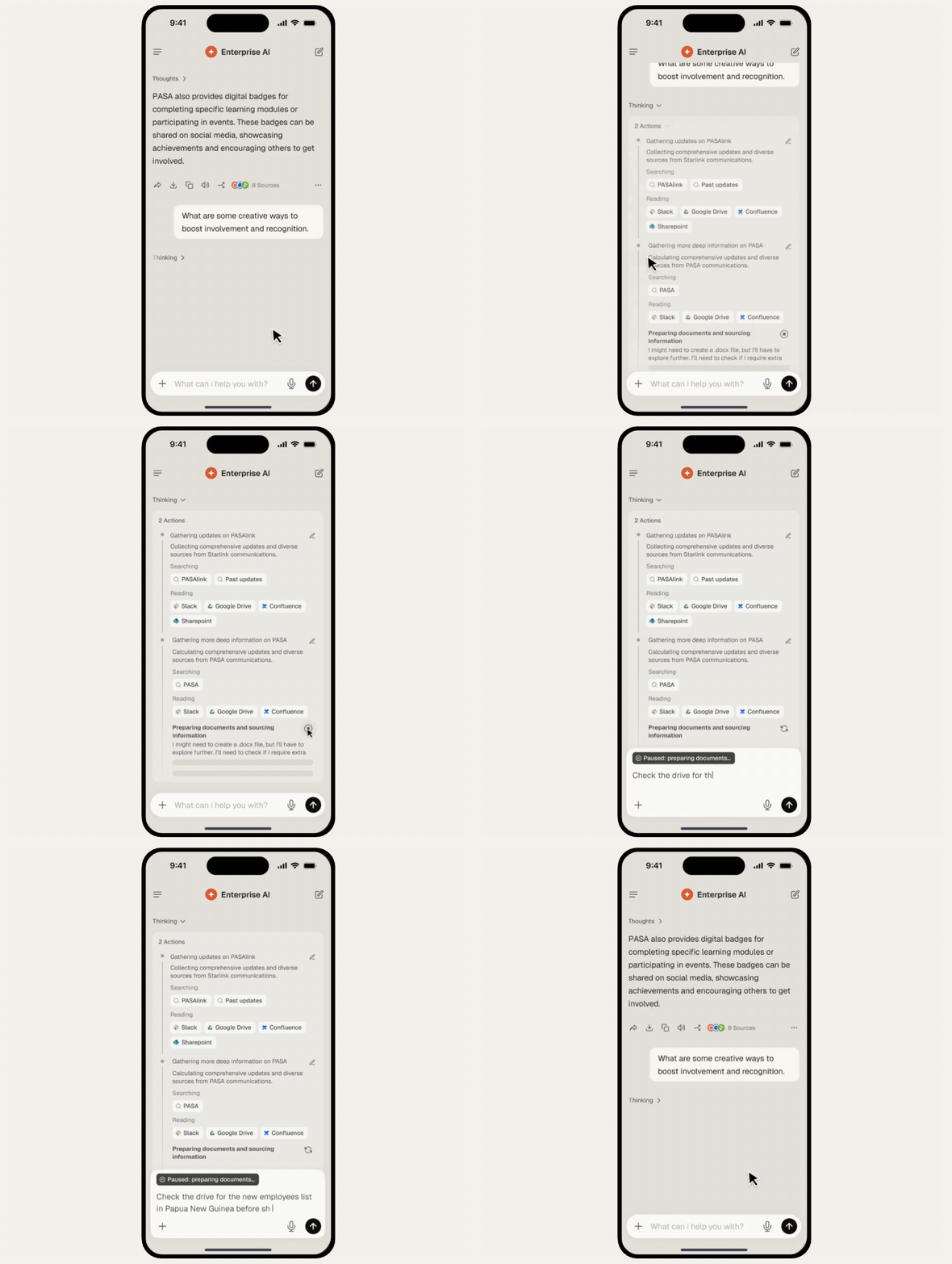
A well-designed Chain-of-Thought should reflect that reality. It should be like a collaborative working session.
Each step in the reasoning process should be open to interruption. The user should be able to pause, question, and redirect. Not after the answer is delivered, but while it is being formed. If a data source feels unreliable, it should be challenged at the point of use. If an assumption feels misaligned, it should be replaced before it compounds. If the direction itself is flawed, the path should be reset.
This is not a feature addition. It is a shift in role.
The user moves from being a reviewer of AI outputs to a participant in AI reasoning.
The most mature view today will be to treat CoT as a design layer. The goal is not to show thinking, but to make thinking reliable and collaboration more real. The real opportunity is not visibility, but intervention.
The New Definition Of Trust
Enterprises that understand this will begin to treat Chain-of-Thought as a design problem, not just a model capability. They will structure reasoning into discrete, modular steps that can be inspected, edited, and reversed.
What is emerging here is a different definition of trust.
Trust is not built by confident answers. It is built by the ability to engage with how those answers are constructed. To question them. To reshape them. To take ownership of them.
Where Most Enterprises Are Not Looking
As AI becomes embedded deeper into enterprise systems, the quality of outcomes will depend less on the model itself and more on how its reasoning is designed, exposed, and governed. Chain-of-Thought will sit at the centre of that shift. Not as a transparency layer, but as a control surface.
The future of AI in enterprises will not be defined by how quickly it can produce answers. It will be defined by how well it allows humans to shape the thinking behind those answers.
Do not trust the answer too quickly. Stay with the path a little longer. That is where the real intelligence lies.
I am Lisa Rath
I lead the product design team at ICD and work with enterprises building AI-enabled systems across functions. This is what I am observing as organisations move from experimentation to scale, and what will begin to define how AI is actually used, not just adopted.