

Reasons to read
Enterprises are shaping how humans interact with AI and computers. I explore how design-thinking has a pivotal responsibility here.
we are witnessing a quiet regression in human–computer interaction.
many products are collapsing rich, expressive interfaces into a single pattern—
type → wait → review → retype.
This changes how we use computers and what they do for us.enterprises should see AI as something humans collaborate with—not something we merely instruct and not adapt AI in fragmented, chat-only ways.
instead, there is a need for interaction-rich systems that preserve human control, context, and creativity.
I am Lisa, partner at ICD
Today I lead the product design team at ICD and currently consult with UnifyApps and Sirion to design the enterprise operating system for AI and in the past have consulted extensively with PeopleStrong HR and BookMyShow for their GTM apps — of course always collaborating and materializing ideas with extraordinarily brilliant minded CXOs and PMs.
Designing for the enterprise AI experience exposes me to emerging ideas that may change the world or may not survive for a month, week or sometimes, a single review.
The Scarlet Letter* is the space I will use to amplify the most promising or alarming enterprise AI ideas, before they impact the future of how we work.
Occasionally, I’ll share deep dives on the forces shaping the world of AI.
Interaction is shrinking
Every application we’ve ever used is a collection of learned gestures.
Writing tools let us create stories & induce clarity of thought.
Design tools let us explore creative possibilities without fear.
Spreadsheets let us model logic.
Procreate allows me to draw freely.
These gestures are not accidental, they help us think through doing.
AI’s big promise is to augment efficiency, handle routine and supercharge our ability to solve humanity’s biggest problems. And no one’s as excited about it as me. But the way that’s shaping up on our screens is different from what I'd imagined it to be.
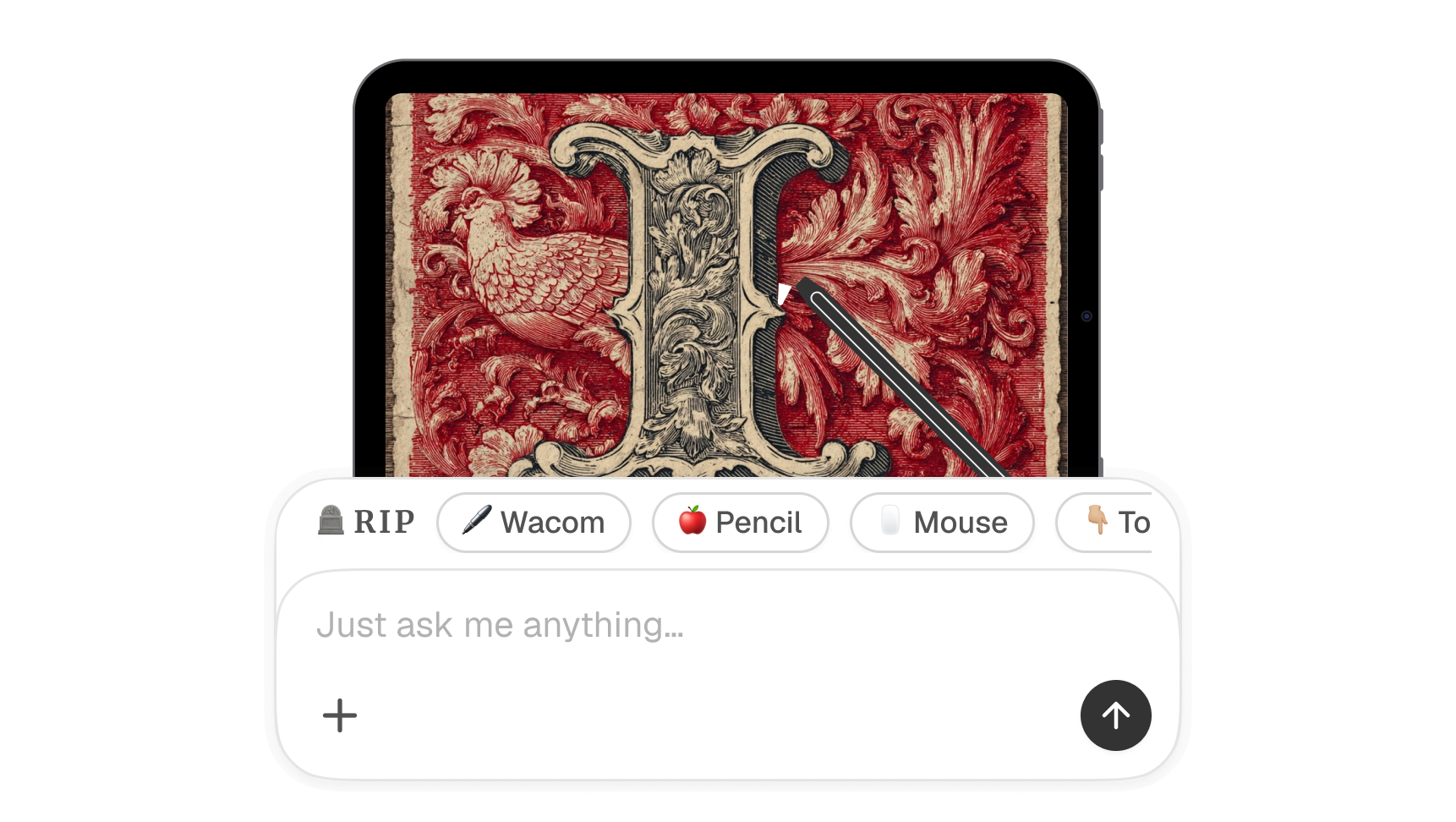
In one line, just describe what you want, and the system will do the rest. At first glance, this feels powerful. Faster. More efficient. But underneath, something critical feels missing.
When interaction is reduced to text (feedback) alone, humans stop participating in the process and start supervising outcomes. The process of creation cannot be compressed into ideation and feedback alone, it requires creating things and that needs, you guessed it, interactions.
When interaction is reduced to text alone, humans stop participating in the process and start supervising outcomes
We’ve been here before
Early computers worked exactly this way. They were controlled through command lines—green text on black screens—operated by specialists who understood how to translate intent into syntax. The computer was conversational, but only in the narrowest sense. The graphical user interface then changed everything.
GUI wasn’t about aesthetics, it allowed non-experts to act, not just instruct.
Icons, sliders, canvases, timelines, layers, and previews gave users ways to explore, adjust, undo, and refine. Software became something you worked with, not something you commanded from afar.
Today’s most AI-first products risk undoing this progress or supplanting it with a less interactive and iterative experience.
Natural language
Text feels universal. Natural language feels human, that’s why AI chat interfaces took off so quickly. But natural language is not an interaction, not with an AI model.
The type / speak → wait → review → retype is efficient but ineffective.
Even advanced AI tools across writing, coding, design, analytics, and product development often feel strangely similar because the interaction model is identical, despite radically different capabilities.
The result is an experience that works but risks removing the diverse interfaces that lets us do great work with computers.
type → wait → review → retype is efficient but ineffective. The result is an experience that works but risks removing the diverse interfaces that lets us do great work with computers.
The real problem is not AI—it’s the wrapper
AI is not removing human agency. Our design choices are inadvertently causing these shifts. The way we currently “wrap” AI assumes that humans exist outside the system and not inside it. This is especially dangerous in enterprise software, where context, constraints, governance, and collaboration matter deeply.
Enterprises don’t build single-use AI tools but make ecosystems of workflows, roles, permissions, data sources, and decisions. Applying AI as a series of isolated chat boxes across applications creates fragmentation, inconsistency, and cognitive overload.
Design thinking must re-enter the conversation
Design is the discipline of shaping behavior.
The next generation of AI systems must allow humans to:
Interact during generation, not after, adjust structure, and direction visually experience cause and effect in real time—collaborate with AI through multiple modes—not just text.
Not that its not happening. In my discipline —design tools like the Adobe Suite, Figma are doing this rather intelligently.
My daily tool, Figma, does a great job this kind of interaction. At the right time, magically appear an agent and assists. Truly collaborative, yet not intrusive and respects the users work methods 100%.
This behavior can be learnt and implemented for Enterprise AI tools too. We need to design and develop more collaborative interfaces—where language, visuals, gestures, previews, and controls coexist.
The future of human–AI interaction is not “prompting better”. It is working together continuously.
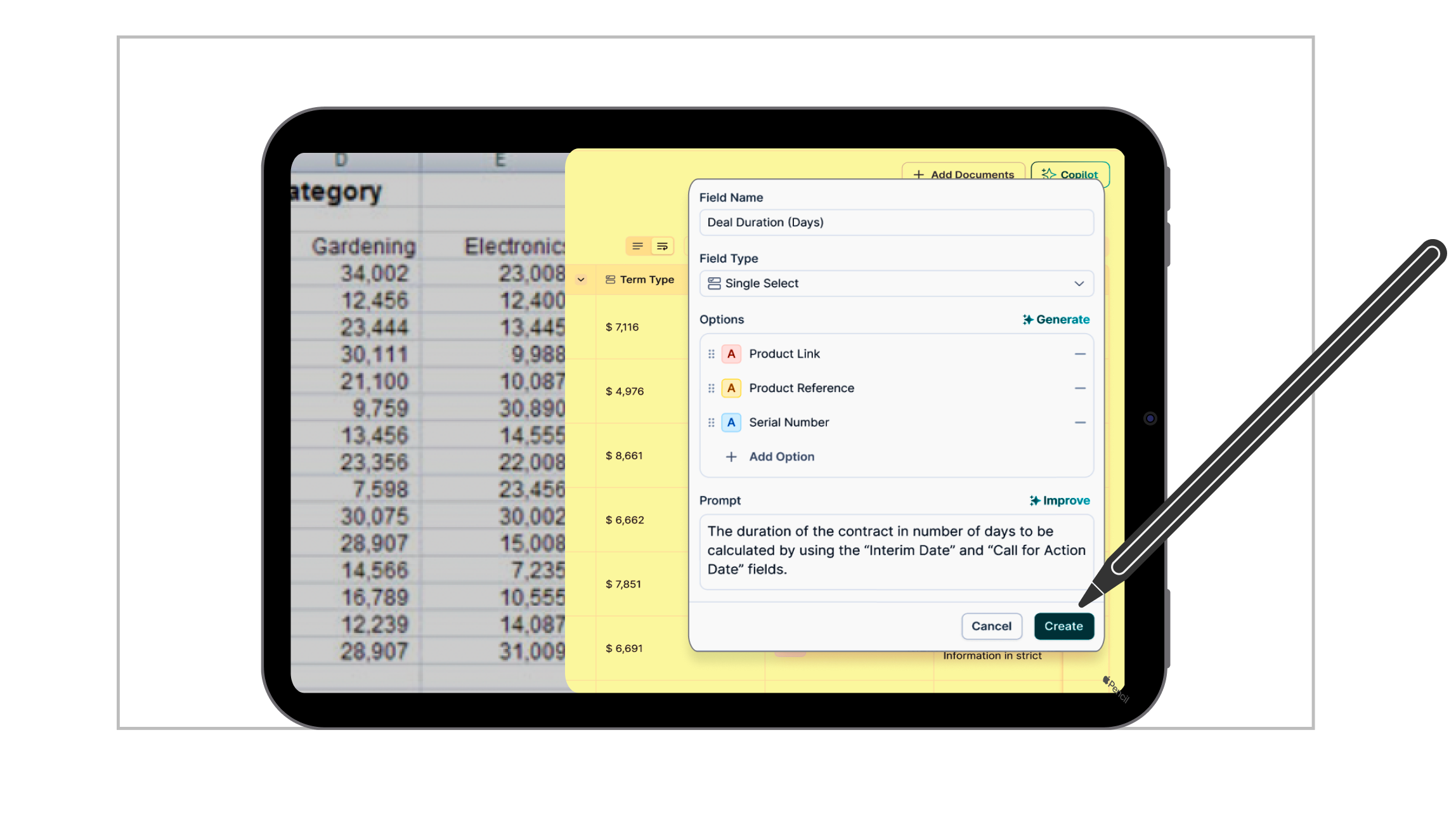
The future of human–AI interaction is not “prompting better”. It is working together continuously.
What this means for enterprises
Enterprises must stop thinking of AI enablement as:
A chatbot added to every product.
A prompt layer on top of legacy workflows.
A collection of disconnected AI features.
Instead, AI must be approached as a holistic interaction layer—designed end-to-end across applications, roles, and workflows.
The question enterprises should ask is not:
“Where can we add AI?”
BUT
“How do humans and AI collaborate inside our systems?”
The companies that win will not be those with the most AI features—but those that design the best shared agency between humans and machines.
Ultimately, this is not a conversation about interfaces.
It is a conversation about how we choose to work with intelligence.